

Updated: Sep 9, 2024– The healthcare industry is meant to be a beacon of hope and recovery, a place where individuals can seek solace and healing. Yet, recent findings suggest a troubling reality within Acadia Healthcare’s psychiatric hospitals. This article will reveal how one of America’s largest healthcare chains has allegedly prioritized profits over patient well-being, holding individuals against their will without medical necessity. If you’re concerned about patient rights and healthcare ethics, read on to understand the depth of these issues and what steps can be taken for justice.
Acadia Healthcare is no stranger to controversy, particularly following a New York Times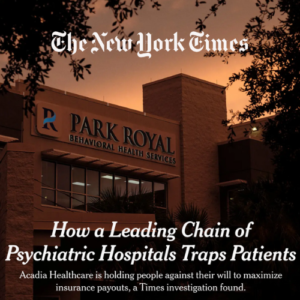 investigation that unveiled some disturbing practices. With the pandemic exacerbating mental health issues, Acadia’s revenues have soared, doubling its stock price. However, this financial success is reportedly built on a foundation of unethical practices, including unlawfully detaining patients in their facilities. The investigation revealed that many patients were held without meeting the legal criteria for involuntary commitment, highlighting a significant breach of civil rights.
In 12 out of the 19 states where Acadia operates, complaints from patients, employees, and even law enforcement have surfaced, indicating that the company is detaining individuals illegally. Judges, in some cases, have intervened to mandate the release of patients who were unjustly held. These allegations raise questions about the integrity and accountability of a company that charges $2,200 per day for treatment.
It’s crucial to grasp the types of mental health and dependency problems that might require inpatient treatment. Conditions like severe depression, bipolar disorder, schizophrenia, and substance abuse often necessitate specialized care and supervision. These illnesses can impair a person’s ability to function daily, sometimes posing a risk to themselves or others. Inpatient treatment aims to stabilize these individuals in a controlled environment, ensuring safety and facilitating recovery.
However, the decision to admit a patient involuntarily should always be based on medical necessity, guided by trained professionals adhering to ethical guidelines. This is particularly important because the balance between patient safety and civil liberties is delicate. Holding someone against their will without proper justification not only violates their rights but can exacerbate their condition.
The evidence against Acadia Healthcare includes numerous testimonies and patient records that reveal many patients were held against their will. Patients seeking routine mental health care found themselves entrapped in Acadia facilities. Health inspectors have documented instances where patients were left unsupervised or denied access to essential medications. Furthermore, some inspection reports describe cases of assault and unsanitary conditions, painting a grim picture of the care provided.
In Florida, a social worker was detained for six days merely because she sought medication adjustments for her bipolar disorder. Similarly, a woman in Indiana looking for therapy was held for seven days without justification. These stories are not isolated incidents but part of a wider pattern within Acadia’s operations.
For former patients who believe they’ve been unlawfully detained by Acadia Healthcare, you will need to gather all relevant documentation, including medical records and any communication with the facility. This will be crucial in your ability to obtain justice.
Next, reach out to the legal support specialists at Lwyr.com, who can assist you with better understanding these types of cases, determine whether you have potential case, and then place you with top-tier legal representation with experience and proven track record with these types of cases. Lwyr.com can provide a free case review and help determine your eligibility for joining a class action lawsuit. With their help, former patients can take the necessary legal steps to hold Acadia accountable for their experiences and help you get the compensation you deserve for having your rights violated.
The broader issue of Acadia’s alleged violations extend beyond individual cases. The company’s practices reflect a systemic problem that requires public attention and regulatory scrutiny. By understanding and exposing these practices, we can work towards preventing future occurrences and ensuring that patient care is prioritized over profit.
Patients and their families are encouraged to share their stories, creating a collective voice that demands change. Public awareness is a powerful tool in advocating for policy reforms and stricter regulations. Together, we can push for transparency and accountability in healthcare, safeguarding the rights of vulnerable individuals.
According to the allegations, financial incentives are at the heart of Acadia’s misdeeds. The evidence discovered in the investigation suggests that the company systematically prolongs patient stays to maximize insurance payouts. Employees have reported being coached to exaggerate symptoms in patient charts, using specific language to justify extended stays. This manipulation of medical records not only undermines trust in healthcare but also highlights the pervasive influence of profit motives.
In some cases, there is evidence that Acadia may be only retaining patients to the point where their insurance benefits are exhausted and then releases them, disregarding their actual medical needs. If accurate, this approach is a stark violation of ethical standards, emphasizing the need for reform within the industry. Patients are not commodities, and their care should never be compromised for financial gain.
Involuntary stays have profound effects on patients, both emotionally and financially. The trauma of being held against one’s will can lead to lasting psychological distress, making it difficult for individuals to seek help in the future. Additionally, the financial burden of unexpected medical bills can be overwhelming, especially when insurance coverage is exhausted.
The case of former patient, Kathryn MacKenzie, who was charged $13,200 for a six-day stay despite not meeting the criteria for involuntary commitment, underscores the exploitative nature of such practices. By contacting Lwyr.com to get help with challenging these practices legally, former patients can seek compensation and closure for their ordeals.
The revelations from many former Acadia Healthcare patients and employees serve as a wake-up call for the general public. It’s crucial to remain informed and vigilant about the practices of healthcare providers. By advocating for transparency and supporting those affected by unethical practices, we can contribute to a more just and accountable healthcare system.
Encourage your local representatives to push for stricter regulations and oversight of psychiatric facilities. Support organizations and initiatives that aim to protect patient rights and promote ethical practices in healthcare. Together, we can hold institutions accountable and foster an environment where patient care is the utmost priority.
Last but not least, be sure to contact Lwyr.com to help with your legal case. Lwyr.com will never charge you a fee, ensure you are represented by the most competent law firm for your specific situation, and will be by your side as your advocate throughout your case.
The allegations against Acadia Healthcare highlight a troubling intersection of healthcare and profit motives. By understanding the depth of these issues and taking action, we can work towards a more ethical and transparent system. For those affected, seeking legal assistance and sharing their stories are crucial steps in holding human rights violators accountable. Collectively, we must demand change and ensure that patient well-being is never compromised for financial gain. For more information or to seek legal assistance, contact Lwyr.com at (888) 888-8920 today.